PLA vs PETG vs ABS: The Ultimate 3D Filament Buyer's Guide
A comprehensive comparison of PLA, PETG, and ABS filaments to help you choose the right material for strength, heat resistance, and ease of printing.
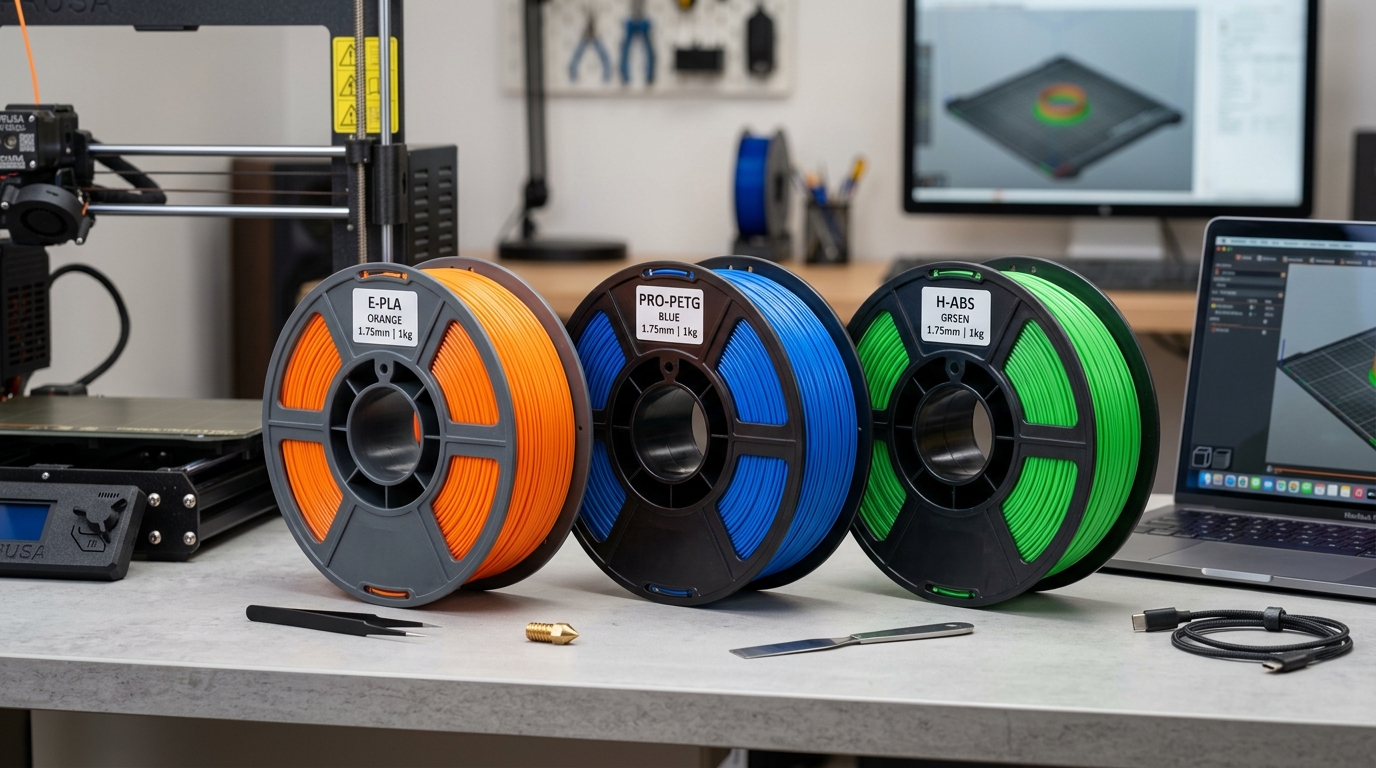
1. PLA (Polylactic Acid): The Everyday Standard
PLA remains the most popular 3D printing material in the world due to its user-friendly nature, zero warping tendency, and crisp detail output. Derived from renewable organic sources like cornstarch, PLA prints at lower temperatures (190°C–220°C) without requiring a heated chamber. It is the premier choice for visual prototypes, architectural models, and decorative items.
2. PETG (Polyethylene Terephthalate Glycol): Toughness & Flexibility
Combining the ease of PLA with the durability of ABS, PETG offers superior impact resistance, chemical stability, and moisture resistance. PETG prints around 230°C–250°C and produces ductile, slightly flexible parts that do not snap under mechanical strain. It is ideal for functional brackets, outdoor enclosures, and mechanical fixtures.
3. ABS (Acrylonitrile Butadiene Styrene): High Temperature & Impact Resistance
Engineered for tough environments, ABS resists heat up to 95°C and provides exceptional tensile strength. Because ABS is prone to thermal contraction and warping, printing with an enclosed bed at 240°C–260°C and 90°C+ heatbed is essential. ABS parts can also be post-processed using acetone vapor smoothing for a mirror-like finish.
| Property | PLA | PETG | ABS |
|---|---|---|---|
| Nozzle Temp | 190°C - 220°C | 230°C - 250°C | 240°C - 260°C |
| Bed Temp | 45°C - 60°C | 70°C - 85°C | 90°C - 110°C |
| Enclosure Required? | No | No | Yes (Recommended) |
| Impact Strength | Moderate | High | Very High |
| Heat Resistance | Up to 55°C | Up to 75°C | Up to 95°C |
| Ease of Printing | 5 / 5 | 4 / 5 | 3 / 5 |
Key Takeaway
For visual models and beginners, select PLA. For outdoor or durable parts exposed to moisture, choose PETG. For high-heat mechanical components, ABS is the industrial standard.