Everything you need to know about 3D printing filaments and resins what they're made of, what they're good for, and how to pick the right one for your project.
What are 3D Printing Filaments?
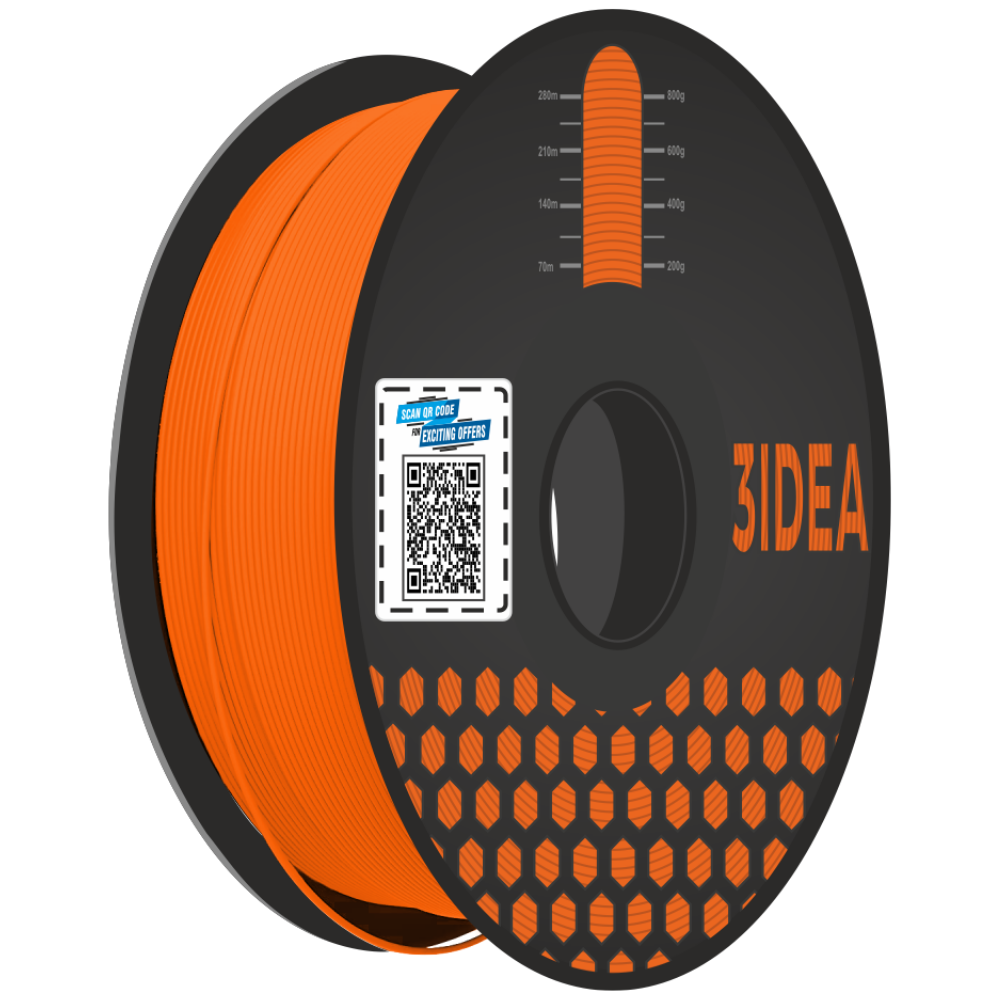
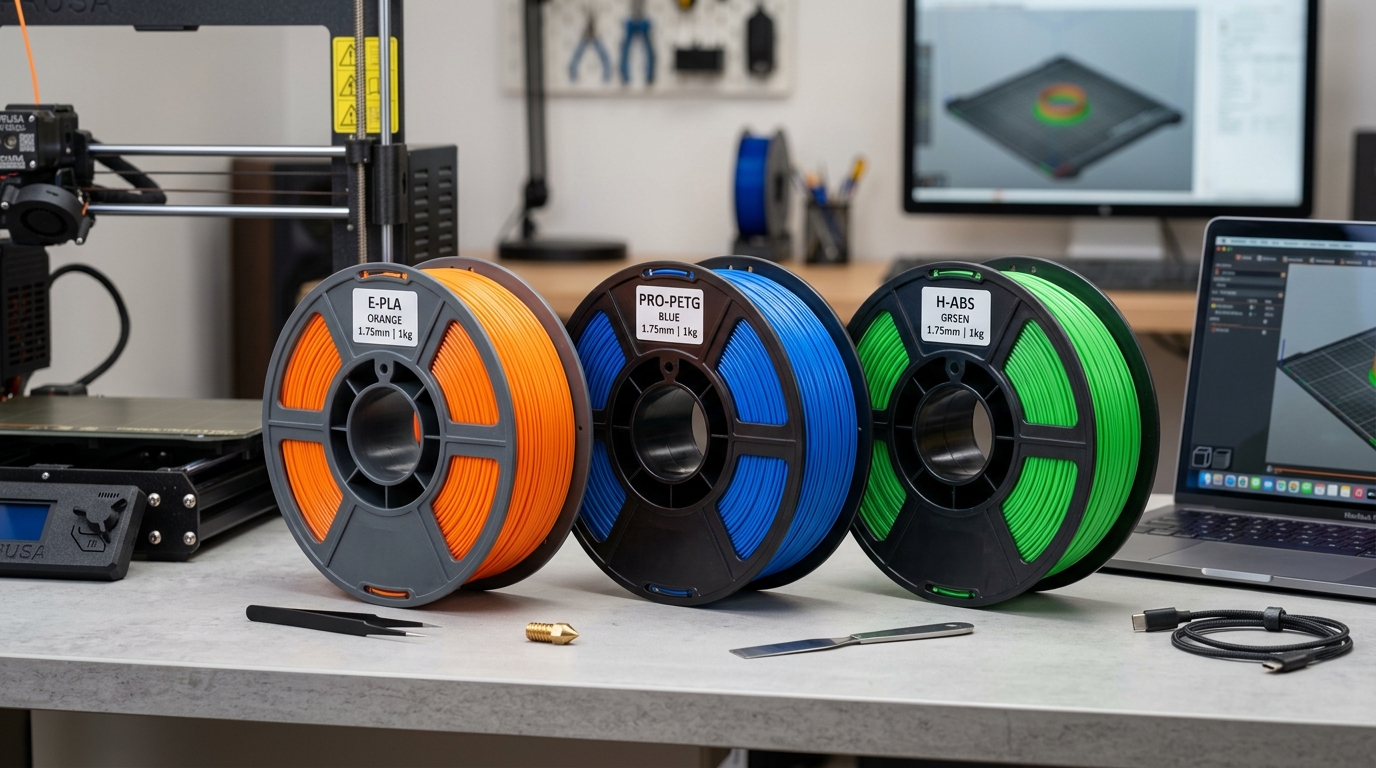
3D printing filament is a thermoplastic material supplied as a continuous spool that is melted and deposited layer by layer to create three-dimensional objects. Filaments are used in FDM (Fused Deposition Modeling) 3D printers, making them the most popular and widely used materials in additive manufacturing.
Different filament materials offer unique characteristics such as strength, flexibility, heat resistance, chemical resistance, durability, and surface finish. Choosing the right filament depends on your application, the required mechanical properties, and the desired appearance of the final print.
Filament Types
Tap a material to see full details.
PLA
PLA (Polylactic Acid) is a biodegradable thermoplastic made primarily from renewable resources such as corn starch or sugarcane. It is the easiest material to print and is widely used by beginners, educational institutions, hobbyists, and professionals for prototypes and visual models. Its low printing temperature, minimal warping, and excellent surface finish make it the most commonly used filament.
School projectsProduct prototypesArchitectural modelsToysDisplay piecesCustom giftsFigurines
ABS
ABS (Acrylonitrile Butadiene Styrene) is a durable engineering plastic known for its impact resistance, toughness, and ability to withstand higher temperatures than PLA. It is commonly used for functional parts that require strength and durability.
PETG (Polyethylene Terephthalate Glycol) combines the ease of printing found in PLA with the durability and chemical resistance of ABS. It offers excellent layer adhesion and is widely used for functional prototypes and end-use parts.
Best For
Functional PartsFood-safe containers (when printed and processed appropriately)Mechanical ComponentsOutdoor ProductsTransparent Parts
Water bottlesProtective coversContainersMachine guardsFunctional prototypes
TPU
TPU (Thermoplastic Polyurethane) is a flexible and elastic filament that can bend, stretch, and compress without breaking. It is ideal for products requiring flexibility and impact absorption.
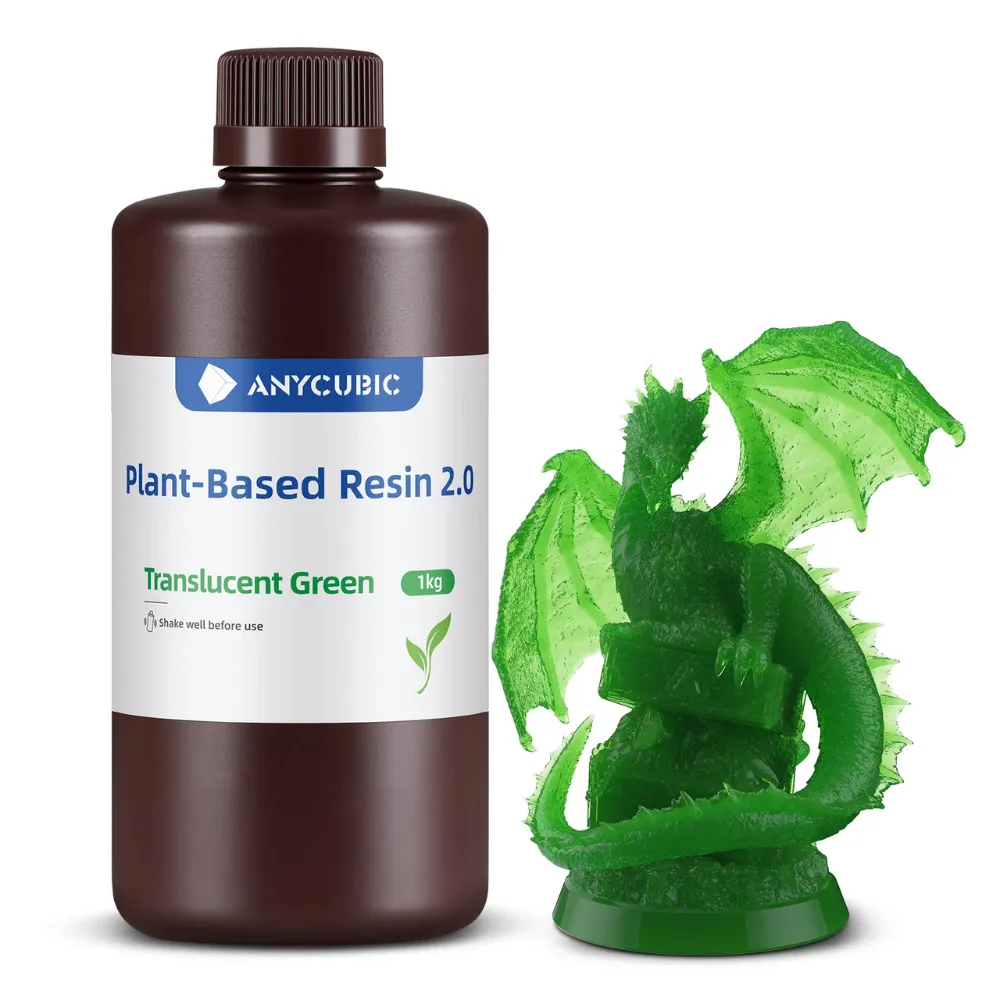
3D printing resin is a liquid photopolymer material that solidifies when exposed to UV light. Used in resin-based 3D printers, these materials produce parts with exceptional detail, smooth surface finishes, and high dimensional accuracy.
Different resin formulations are engineered for specific applications, ranging from visual prototypes and miniatures to functional engineering components, dental models, and jewellery casting.
Resin Types
Tap a material to see full details.
Standard Resin
Standard Resin is the most widely used material for resin 3D printing. It is designed to produce highly detailed parts with smooth surfaces and excellent dimensional accuracy, making it ideal for prototypes, display models, and general-purpose printing.
Best For
Visual PrototypesMiniaturesFigurinesProduct MockupsEducational ModelsDecorative Prints
Key Properties
High detail and precisionSmooth surface finishEasy to printAvailable in multiple colorsCost-effective
Castable Resin is specially formulated for investment casting applications. It burns out cleanly during the casting process, leaving minimal ash or residue, making it ideal for producing highly detailed metal parts.
Best For
Jewellery CastingDental CastingPrecision Metal ComponentsCustom Metal Products
Key Properties
Clean burnoutExceptional detailHigh dimensional accuracySmooth surface finishMinimal residue after burnout
RingsPendantsBraceletsDental crownsCustom metal componentsArtistic castings
Special Resin
Special Resin is a category of advanced photopolymer resins engineered to meet specific performance requirements — applications that demand enhanced strength, flexibility, heat resistance, chemical resistance, or faster printing speeds. It may include engineering, tough, flexible, high-temperature, transparent, and other application-specific resin formulations.
AerospaceAutomotiveManufacturingElectronicsHealthcareResearch & Development
Applications
Functional prototypesEngineering componentsJigs and fixturesIndustrial toolingCustom manufacturing parts
Water-Washable Resin
Water-Washable Resin is formulated to simplify post-processing by allowing printed parts to be cleaned with water instead of isopropyl alcohol (IPA). It offers excellent print quality while making cleanup more convenient for beginners, educational institutions, and professionals.
 Filament Guide